Some honest thoughts about Black Friday, profit margins, and the true cost of handmade goods.
Black Friday is just around the corner, followed by Small Business Saturday and Cyber Monday.
You know what that means.
SALE! SALE! SALE!
40% off! 50% off! 75% off!
Everywhere we look, businesses are competing to offer the biggest discounts, and we've become so accustomed to these enormous sales that when a small business announces a little "10% off!" it can feel like...
Um, thanks?
I get it. I really do.
But as a small business owner, I want to shed some light on something that I think deserves a lot more attention.
What if our obsession with sales is actually making everything more expensive?
The Problem With Sale Culture
There is tremendous pressure on businesses to participate in these big shopping holidays. Customers expect discounts, and businesses don't want to miss out on what can be some of the busiest shopping days of the year.
But here's something I've been thinking about for years:
If a business is constantly offering 30%, 40%, or even 50% off, what does that say about the original price?
Now, there are perfectly legitimate reasons for a business to offer deep discounts. Sometimes they're clearing out inventory, making room for new products, or even selling at a loss.
But there's also a pricing strategy that has become incredibly common: setting regular prices high enough to accommodate frequent sales.
And when this happens, are we really getting a deal?
Or have we simply created an economy where customers are conditioned to wait for discounts, and businesses feel compelled to build those discounts into their prices?
From a marketing standpoint, it's pretty genius.
But from a consumer standpoint, I think it's worth asking:
Why can't we just offer honest, fair prices every day?
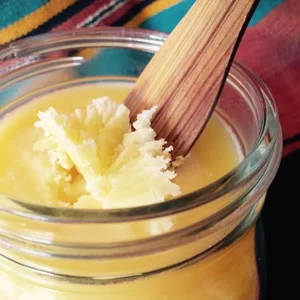
What Goes Into the Price of a Jar of Ghee
Since starting this business, I've tried to keep a few things in balance:
Sourcing the highest-quality ingredients I can find. Choosing quality and ethically sourced ingredients, even when less expensive options are available.
Paying the people who make this business possible fairly. That includes my team and myself. I want the people doing this work to earn enough to feed their families well and live good lives.
Offering our customers a fair and sustainable price. One that reflects the real cost of producing something with care, without inflating prices simply because the market might bear it.
These things matter deeply to me.
I've never approached pricing Good News Ghee with the goal of squeezing every possible dollar out of a jar.
I've approached it by asking:
What does it actually cost to make this beautiful product, pay everyone fairly, keep this little business alive, and offer it to our customers at a price that feels right?
And that's a delicate balance.
Especially when you're making things in small batches, using carefully sourced ingredients, and doing the work by hand.
Why Our Sales Are So Dinky
When we offer 10% off, I know it doesn't look like much compared with the enormous discounts happening all around us.
But for a little business like ours, 10% off is actually a pretty generous offering.
That's because we don't build enormous discounts into our everyday prices.
And it's important to understand that 10% off the retail price doesn't necessarily mean giving up just 10% of our profits.
For example, if a product sells for $20 and costs $15 to produce and sell, there's $5 left before other business expenses and taxes. Offering 10% off brings the price down to $18, leaving just $3.
That little 10% discount has reduced the amount left from $5 to $3 — a 40% reduction.
And that's why those seemingly dinky sales can be a big deal for small businesses.
Our customers might save a few dollars, but those dollars represent a meaningful portion of what keeps our business running.
The True Value of Handmade
Something else I think we've lost in modern consumer culture is an understanding of what things are actually worth.
We are surrounded by products manufactured at enormous scales, often in places where labor and materials cost much less.
And it's easy to forget what goes into something made by human hands.
The sourcing. The preparation. The production. The packaging. The labeling. The cleaning. The emails. The bookkeeping. The countless little details required to get a beautiful product from our hands into yours.
And behind all of it are actual human beings, with families and bills and lives of their own.
When you purchase from a small business, you're doing more than buying a product.
You're supporting someone's livelihood.
You're supporting craftsmanship.
You're helping preserve a way of doing business that values human beings and the quality of their work.
And you're helping make it possible for businesses like ours to continue doing this work.
A Little Invitation This Holiday Season
As we move into the biggest shopping season of the year, I'd love to invite you to think a little differently about the things you buy.
Consider the people behind the products.
Consider the quality of the ingredients and materials.
Consider the wages being paid, the craftsmanship involved, and the communities being supported.
And consider that sometimes the business offering a dinky little 10% discount might actually be offering you a pretty honest deal all year long.
I want to give a shout-out to all the artisans, makers, farmers, creators, and small business owners who are trying to do business this way.
When I see your little "10% off!" or "15% off!" sale, I smile.
Because I know that for many of us, those little discounts represent a real sacrifice.
We're not getting rich very quickly.
But maybe everybody is a little richer because of the way we're doing business.
And that's the kind of economy I want to help create.
One where generosity, honesty, fair wages, beautiful craftsmanship, and care for one another are at the center of our decisions.
Thank you for being part of that with us.
In gratitude,
Marion
Good News Ghee